


Grounded Memories: Metal-detecting as mindful heritage in action
What happens the moment a metal detector beeps? What memories, encounters, and emotions lie behind an object found in the ground? In the research project Grounded Memories, researchers in heritage studies and archaeology, along with metal detectorists, work together to explore how metal detecting in the Netherlands is about more than just finding objects such as coins or jewelry. The project places the personal and social dimensions of this practice at its center and shows how detectorists are connected to the landscape, each other, and the past through metal detecting.
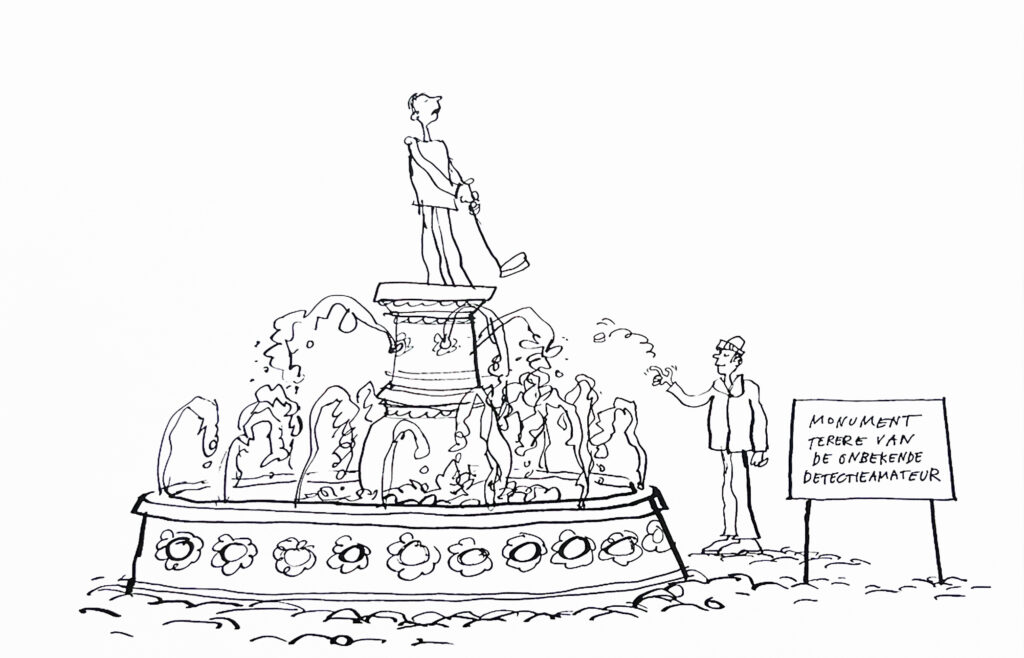
As a recognized heritage practice listed on the Inventory of Intangible Cultural Heritage of the Netherlands, metal detecting offers value not only in terms of material finds, but also through knowledge exchange, community formation, and the stories that emerge around discoveries. However, existing registration systems still primarily focus on archaeological information about the objects, meaning that the personal perspectives, narratives, and knowledge of detectorists often remain outside the record.
Zeeland as a pilot case study
The project aims to bridge this gap by amplifying the voices and experiences of Dutch metal detectorists in Zeeland, where metal detecting is especially active. Central to the project are so-called object interviews and participatory co-creation. Researchers from the Meertens Institute, the University of Antwerp, and KU Leuven collaborate with the Dutch Metal Detecting Association (DDA), Portable Antiquities Netherlands (PAN), De Detectorshop and Dutch Centre for Intangible Cultural Heritage (KIEN). Together, they explore ways to make the intangible dimensions of archaeology more visible, next to the more usual, object-based scientific perspective.
From find to story
A key component of the project is the use of “object interviews.” Detectorists select specific finds and share stories about the moment of discovery, the meaning of the object, and the memories associated with it. By documenting these conversations in text and co-created audiovisual materials, a richer understanding of metal detecting as a heritage practice emerges—one in which not only the object itself is central, but above all the story attached to it.
Co-creation is at the heart of this approach: in collaboration with researchers, heritage communities and detectorists work together in shared processes to develop narratives and media outputs, actively shaping decisions about content, form, and representation. They are involved not only in generating knowledge but also in how it is interpreted and shared.
Output
The project produces several tangible outcomes. Together with the detectorist community, one to three short co-created media expressions will be co-produced, sharing personal stories of finds via YouTube, the DDA website, and social media channels of partner organizations. In addition, a Dutch-language article will be published in Detector Magazine and on LinkedIn, ensuring that insights are directly returned to the community.
From an academic perspective, Grounded Memories will result in an English-language open-access article in an international journal, presenting the project as an example of participatory heritage research. The researchers will also collaborate with PAN to develop practical recommendations for the heritage sector, enabling intangible aspects—such as personal stories, practices of use, and social value—to be structurally integrated into recording systems. The project will conclude with a public workshop for sharing results and exchanging knowledge.
Towards a future-oriented and inclusive heritage field
By actively involving detectorists, the project demonstrates how participatory research can contribute to a future-oriented and inclusive heritage field, in which participation, shared responsibility, and collaboration between researchers and practitioners are central, and in which the so-called authorized heritage discourse is challenged.
Alignment with the Faro Convention and the UNESCO 2003 Convention
The project is funded by the Cultural Heritage Agency of the Netherlands within the framework of the Faro Convention, which calls for participatory approaches to heritage policy. It aligns with the Convention’s emphasis on human values, participation, and shared responsibility in heritage management. It also contributes to the aims of the UNESCO 2003 Convention, which promotes the participatory safeguarding of intangible cultural heritage, by framing and valuing the practices of amateur detectorists as heritage in action.
Duration: June 2026-June 2027
Partners: UAntwerpen, KU Leuven, Portable Antiquities Netherlands (PAN), De Detectorshop (a local company and important social hub for metal detecting in Zeeland), the Dutch Association for Metal Detection (DDA), and the Dutch Centre for Intangible Cultural Heritage (KIEN).
